In open, unprotected waters, the conditions can change at any given moment and the nearest outside assistance may be far away. Add in large swells, strong currents, and the gear you wear becomes more important than ever. In this guide, we’ll show you how to layer up for offshore sailing, with top tips and picks from professional sailors.
26 maj 2026
What to Wear Offshore Sailing
This is an ad and is published by Gotland Runt partner Helly Hansen.
Learn from the professionals
The learnings from professional sailors directly inform our Ægir offshore sailing collection.
How to layer for offshore sailing
The concept of layering is to mix and match different pieces of clothing that will keep you comfortable in changing weather conditions and varying levels of physical activity.
Keep these three pieces in mind:
an inner layer (also known as a base layer) immediately next to your skin to wick away moisture;
a middle layer to keep you warm;
an outer shell layer to protect you from cold winds and foul weather.
Base layer – next to skin
A base layer acts as your second skin and regulates your temperature by wicking away moisture. So whether you're working hard on the coffee grinder, changing sails or even bunking down for the night, your base layer needs to be comfortable and adapt to your activity level.
Midlayer – Extra Warmth
Midlayers are worn over your base layer and are your main source of warmth when out on the water. While the main purpose of a midlayer is to provide warmth, you want to factor in:
1. WEIGHT: avoid the bulk, so you can move around easier
2. FABRICS: go for breathable, synthetic fabrics - they're quicker to dry and evaporate any humidity from your base layer
3. FULL-ZIP: remember, you want to be able to get your midlayer on and off as easily as possible
Waterproof outer layer – protection
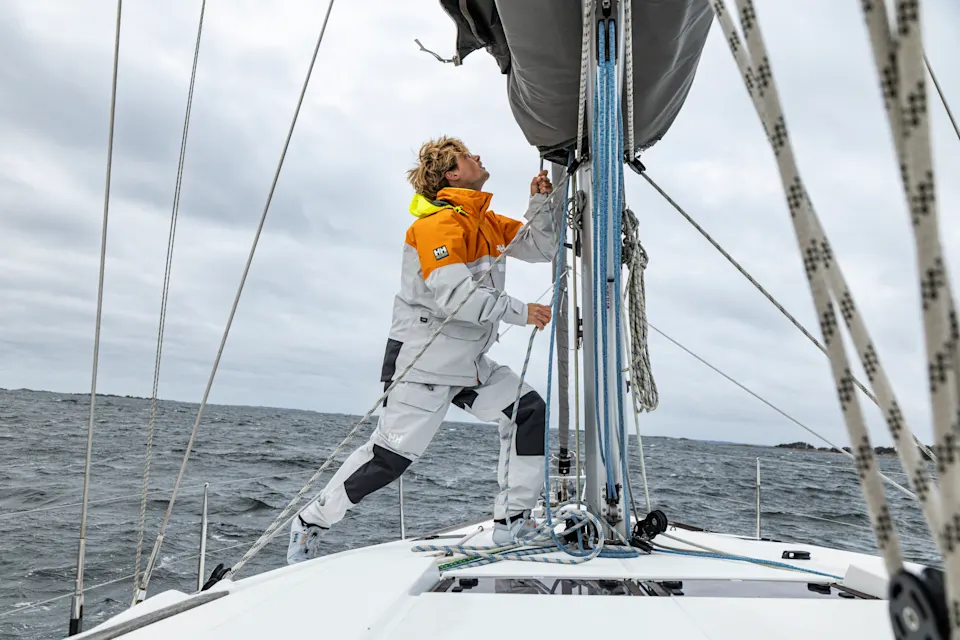
Your outer layer is the most important barrier between you and any water that comes your way, so it needs to be waterproof. We offer a wide range of offshore outer layers for men and women , including jackets, smocks, bibs, and pants. Ultimately, the more waterproof your outer layer, the more you can focus on the tasks at hand.
Waterproof. Breathable. Guaranteed.
For extreme offshore sailing, achieve complete protection with our trusted HELLY TECH® technology. This tough weatherproof outer layer, designed for the harshest conditions is made up of:
a DWR-treated outer fabric
a highly breathable and waterproof membrane
a highly breathable inner fabric, mesh or lining
Learn more about how HELLY TECH® is tested and incorporated into our ocean racing collection .
Other factors to consider
While waterproof performance is key to your outer layer, consider these factors to enhance your experience:
1. DURABILITY: protect yourself from bumps and grazes with reinforced areas in the knees, seat, and bottom hem.
2. VISIBILITY: enhance your visibility with SOLAS reflectors and neon yellow detailing.
3. MOBILITY: move in comfort with articulated knees, an adjustable waist, and ankle cuffs.
4. PROTECTION: keep the wind out with a high collar and hood (choose a packable hood if you prefer).
Trusted by professional sailors
Professional sailor Pip Hare relies on our Ægir Ocean Race series for complete protection. "The backbone of my wardrobe is the Ægir Ocean Race series. I pretty much live in them all the time. They've got padding in the knees and backside, they're strong, durable, and provide me with all the protection I need."
Stay safe with a life jacket
For Pip, safety is fundamental to her work. "Whenever I’m on the boat, the first thing I ask myself is ‘ am I safe? ’. If the answer is no, then I do what I need to, to make sure I am safe. And I don’t just ask myself that question at the beginning of the day – I do it at the beginning of every task and every manoeuvre. My life jacket has a PLB [personal locator beacon] on the waistband and an AIS [Automatic Identification System] inside it, which would help with location." Choose the right life jacket for you and make sure it's undergone proper maintenance — you never know when you'll need a flotation device to stay alive. Disover more essential water safety tips , including information on rescue techniques, in partnership with RNLI, the charity that saves lives at sea.